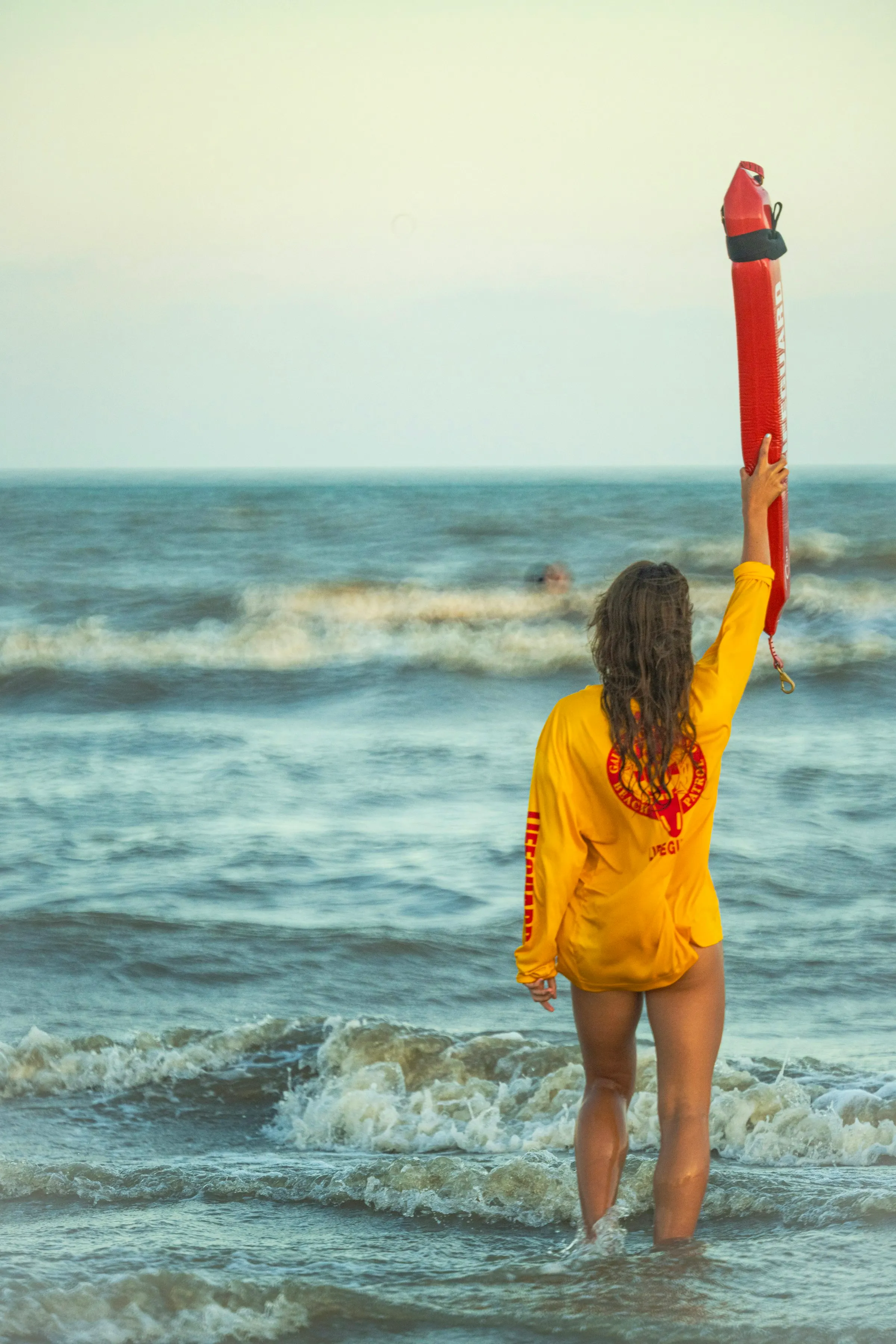
A lifeguard with a rescue buoy in the surf
Beaches

Galveston beach safety and conditions

Five flag colors tell you how rough the Gulf is on the day. Rip currents form next to jetties and piers, both ends of the island are closed to swimmers, and brown water is mostly silt, which tells you nothing about bacteria. This page follows what the Galveston Island Beach Patrol and county officials publish.

What the flags mean
Checked October 29, 20265 flagsMonthly averages 56–87 °F

Galveston beach · Photo: Aaron Tinoco / Unsplash · Credits

The short answer

Before you go in

Do these four checks on the day you swim. The flag shows the surf and currents, Texas Beach Watch shows the bacteria results, and a tower with a guard in it means someone is watching the water.

  1. Look at the flagWhat each flag means
  2. Check the bacteria resultsYour beach on Texas Beach Watch
  3. Swim in front of a tower with a lifeguard in itLifeguards and rip currents
  4. Stay out of the closed areasNo swimming at either end of the island

If a rip current takes you · Water quality · Children

What the flags mean

Green
Calm water. Swim with care anyway: the Gulf is open water
Yellow
Normal conditions. Take care and stay close to shore
Red
Rough water: strong wind, current or surf. Adults go no deeper than the waist; children and non-swimmers stay at the water's edge. Strong rip currents form beside groins (the rock walls that run from the beach into the water) and jetties
Purple
Jellyfish, Portuguese man-o-war, stingrays or other dangerous marine life. Always flown with a second flag
Orange
A warning about air or water quality. Ask a lifeguard. Always flown with a second flag

The Beach Patrol puts up flags and signs every day on Seawall Boulevard at 61st, 53rd, 37th, 29th and 10th Street. In summer, every tower with a lifeguard flies them too. So do East Beach, Stewart Beach and the West End pocket parks during opening hours.

Sign up with the Beach Patrol and it sends you the day's flags and advisories by email or text.

Today's conditions

Rip currents

How to spot one and get out

A rip current is a narrow, fast channel of water flowing away from the beach. It pulls you out to sea but doesn't pull you under. Rips usually form at gaps in sandbars and next to groins, jetties and piers, and they get stronger as the waves grow.

Signs of a rip current

  • A channel of churning, choppy water
  • A patch of water that is a different color from the water around it
  • Foam, seaweed or debris moving steadily out to sea
  • A gap in the line of breaking waves

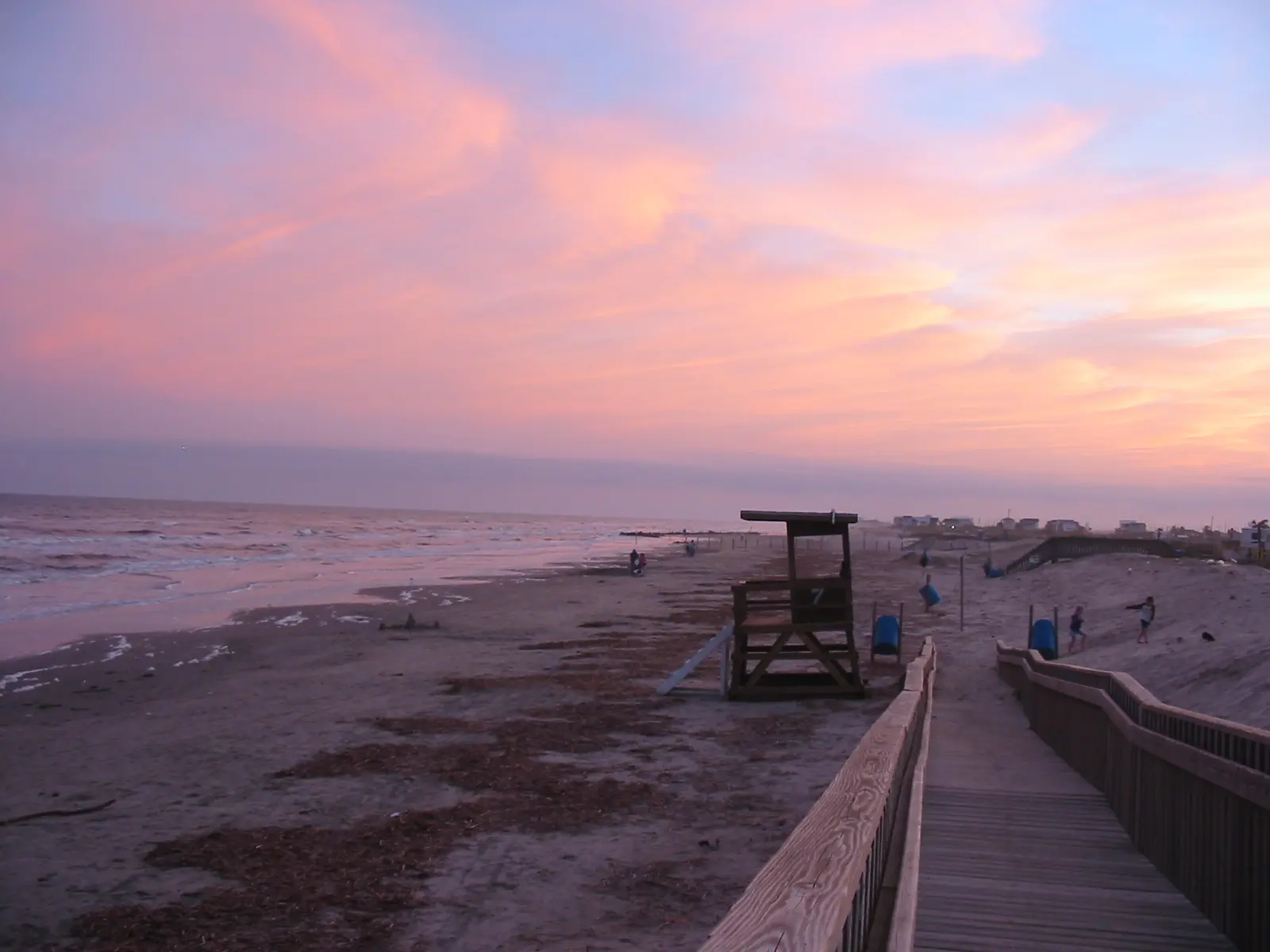
Often you can't see any of these. Polarized sunglasses help. The safest place to swim is in front of a lifeguard tower that has a guard in it right now. Stewart Beach and East Beach have lifeguards, and during the beach season the Beach Patrol staffs 24 towers from East Beach to 61st Street, though not every tower has a guard all day. Travelling with young children? Stay near one of them. Ask a lifeguard where it's safest to swim.

A lifeguard tower on a Galveston beach at sunset
A lifeguard tower on a Galveston beach. Swim in front of one with a guard in it.Galveston beach · Photo: Figure8 / Wikimedia Commons, CC BY-SA 3.0

If a rip current takes you

  • Stay calm and don't swim against it
  • Swim parallel to the shore until you are out of the current, then swim back in
  • If you can't, float or tread water. Face the shore, wave and shout
  • If someone else is in trouble, get a lifeguard or call 911, and throw them something that floats. Don't go in after them
No swimming

The two ends of the island

At the east tip, next to East Beach, the bottom drops off fast into the Houston–Galveston Ship Channel, and the wakes of passing ships can set off sudden currents. At the west tip, San Luis Pass has strong tidal currents, shifting sand and deep channels that catch swimmers and people wading out to fish. The Beach Patrol prohibits going into the water at both. At San Luis Pass, swimming or wading in the restricted area can cost you a fine of up to $500.

Sources: Beach Patrol safety tips, Brazoria County: San Luis Pass rules. More beach rules: Galveston beaches compared.

Water color and seaweed

Why the water is brown some days

The brownish green comes from plankton and from silt that rivers such as the Brazos and the Mississippi carry to the coast. The color is natural, and it says nothing about whether the water meets bacteria standards. On stormy days the brown is stirred-up sand. The water turns clearer, sometimes blue, after several days of light or offshore winds, once the sediment settles.

For bacteria, look up the station nearest your beach on Texas Beach Watch and check the date of its last sample. This Texas General Land Office program tests for Enterococcus, a bacterium that points to sewage or storm runoff. It samples weekly from March to October and every two weeks for the rest of the year. When an advisory is out, stay out of the water: no swimming, wading or surfing. You can still use the beach unless local authorities have closed it. A clean result only covers that one indicator, not every germ.

Sargassum seaweed

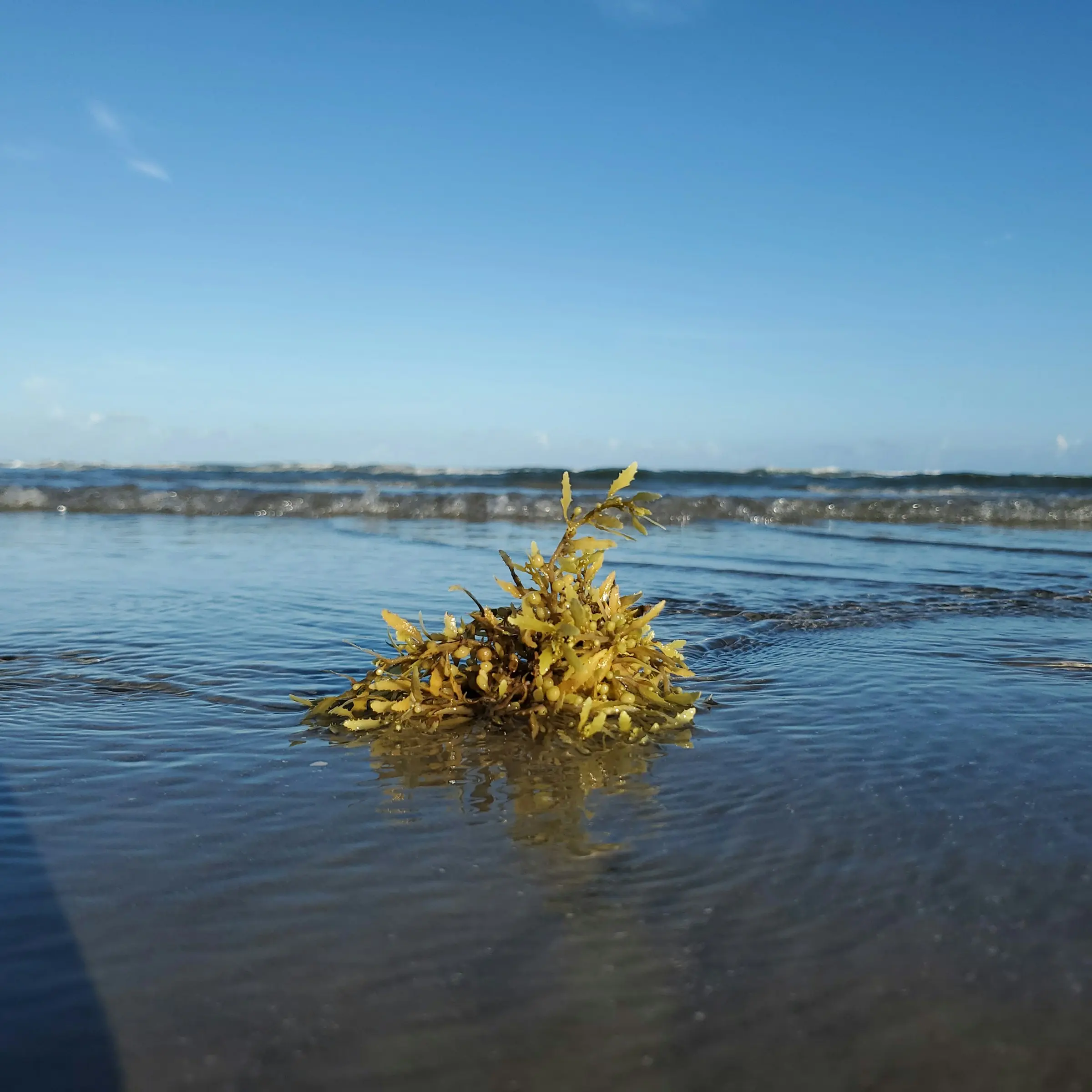
From late spring into summer, brown sargassum can pile up on the sand (water temperatures and seasons month by month: best time to visit). It drifts in from the Atlantic, and young sea turtles and fish shelter in it. County rules allow crews to remove it only once a pile is at least 8 feet wide and 6 inches high, so expect some on the beach. NOAA's Sargassum Inundation Risk tool shows the daily risk for coasts near drifting sargassum. It isn't a forecast of when seaweed will wash up.

Sargassum seaweed in the shallow surf
Sargassum in the shallow surf.Galveston beach · Photo: Melissa Lara / Unsplash

Sources: Visit Galveston: beach conditions, water color, seaweed and sand, water color explained, Texas Beach Watch FAQ, NOAA AOML

Children and weaker swimmers

Rules for every flag

Under a red flag, children stay at the water's edge. On green and yellow days, these three rules still apply.

Source: CDC: drowning prevention

One adult watches
Choose one adult to watch the children closely and without a break while they are in or near the water, even when a lifeguard is on duty
A life jacket
Air-filled and foam toys don't keep anyone afloat safely. A life jacket does
A swim buddy
Everyone swims with a partner, adults too
Other hazards

Sandbars, stingrays, sun and storms

Sandbars and troughs
Someone standing far out may be on a sandbar, and the trough between it and the beach can be over your head. Waves also dig holes, even in shallow water.
Piers and jetties
Barnacles on them cut skin, and rip currents form alongside them. Swim well away from them.
Jellyfish and man-o-war
Get out of the water. Lift or pull off the tentacles without touching them with bare skin, or rinse them off with seawater. Then soak or rinse the sting in hot water that isn't scalding to ease the pain. Don't rub it with sand. Call 911 for trouble breathing, signs of shock or severe pain. Jellyfish washed up on the sand still sting.
Stingrays
Shuffle your feet as you wade so they swim off. Water shoes help, especially for children.
Sun and heat
Use a broad-spectrum, water-resistant sunscreen of SPF 30 or higher, even on cloudy days. Put more on every two hours and right after swimming. Wear light clothing and drink plenty, but not alcohol.
Thunder and lightning
If you can hear thunder, lightning can reach you. Leave the water and the beach for a building or a car with a metal roof, and wait 30 minutes after the last thunder.
Cuts and open wounds
Keep them out of salt water if you can, or cover them with a waterproof bandage. After contact with seawater, wash any cut with soap and clean running water.

Sources: Beach Patrol Texas-specific hazards; American Heart Association and Red Cross first aid guidelines 2024; American Academy of Dermatology; National Weather Service; CDC: Vibrio.

Water temperature

How warm the Gulf is, month by month

August has the warmest water and January the coldest. From June to August the average is above 84 °F. The figures are NOAA's long-term monthly averages for the station at the entrance to Galveston Bay.

Source: NOAA NCEI Coastal Water Temperature Guide, station Galveston Bay Entrance, North Jetty

Galveston water temperature by month
Month°F°C
Jan55.8 °F13.2 °C
Feb57.8 °F14.3 °C
Mar64.5 °F18.1 °C
Apr71.9 °F22.2 °C
May78.4 °F25.8 °C
Jun84.4 °F29.1 °C
Jul85.9 °F29.9 °C
Aug86.8 °F30.4 °C
Sep83.6 °F28.7 °C
Oct77.0 °F25.0 °C
Nov67.6 °F19.8 °C
Dec59.9 °F15.5 °C